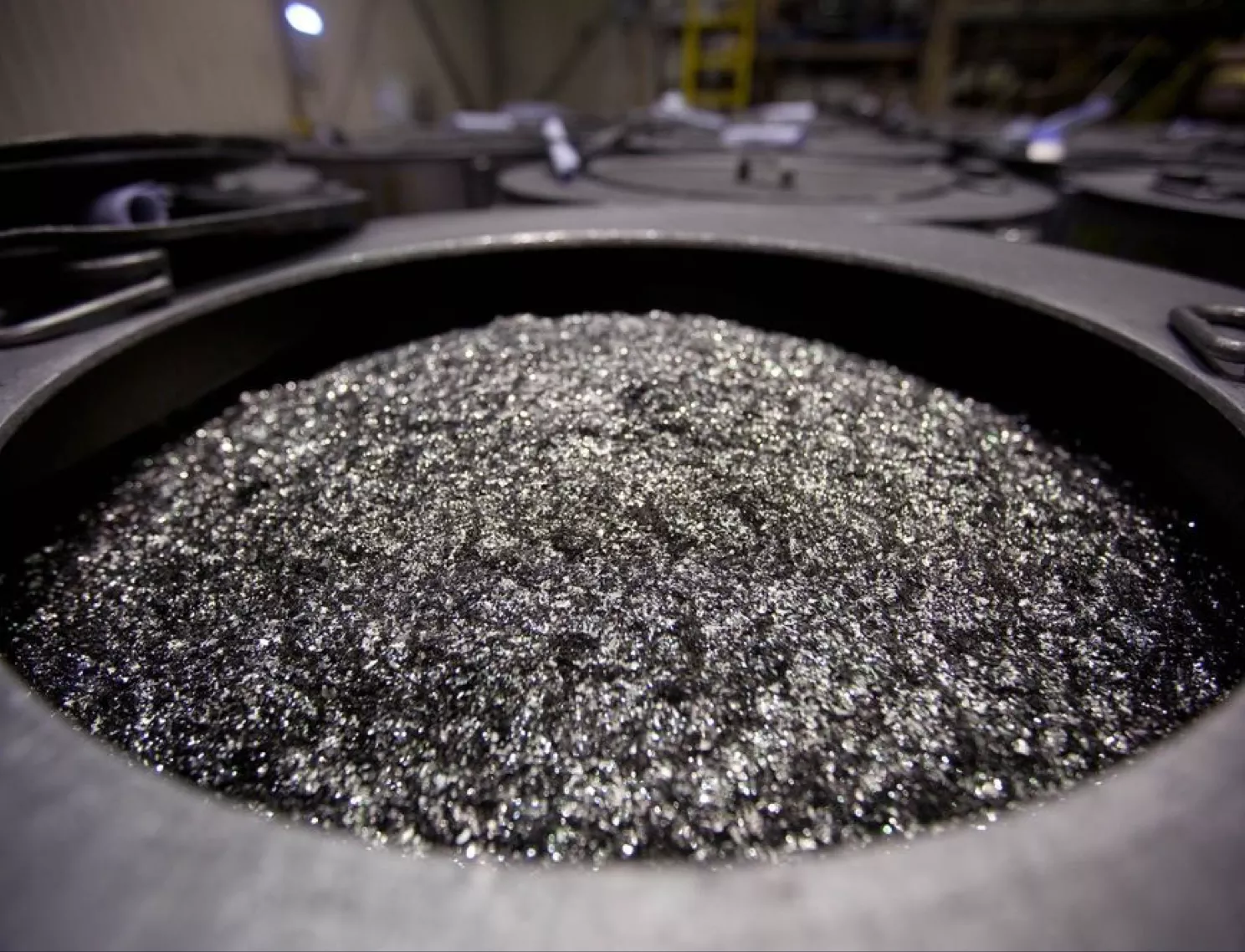
Global governments have listed rare earths as critical minerals including Australia, USA, EU, Canada and the UK.
Rare Earths are used in 5 major sectors: permanent magnet materials, catalytic materials, luminescent materials, polishing materials, and hydrogen storage materials.
The Global Rare Earths Market is valued at US$2bn and is forecast to grow to $12bn by 2030.
Strategic uses for rare earths
Renewable energy
Rare earth elements are vital for renewable energy technologies, playing a key role in the production of powerful magnets used in wind turbines and electric vehicle motors. They enhance the efficiency of solar panels and energy storage systems like batteries.
Defense systems
Rare earth elements are critical to modern defense systems. They also enhance radar, sonar, laser targeting, and improving precision, energy efficiency, and durability in extreme conditions.
Aviation and aerospace
Rare earth elements are essential in aviation and aerospace, where they are used to make high-performance magnets, sensors, actuators, and radar systems that are the backbone of modern avionics.
Satelite Communications
Rare earth elements like neodymium, samarium, erbium, yttrium, europium, and lanthanum are essential for making satellite communications efficient, compact, and reliable.
Advanced robotics
Rare earth elements are fundamental to advanced robotics, providing the powerful, compact magnets—especially neodymium-iron-boron (NdFeB) types—needed for precise movement in motors, actuators, and sensors.
Medical imagery
Rare earth elements are crucial in medical imaging, significantly improving the quality and effectiveness of technologies like MRI, CT scans, and PET imaging.
Rare Earth Permanent Magnets
Rare earth permanent magnets are the largest use of rare earths by value.
Rare earth permanent magnets are made from light elements neodymium (Nd) and praseodymium (Pr), and heavy elements dysprosium (Dy) and terbium (Tb). These magnets are essential for electric vehicle (EV) motors.
Global demand for these magnets is expected to grow at about 8.6% annually from 2022 to 2035, driven by EV adoption. By 2030, EVs will make up over 60% of vehicles sold worldwide, with annual sales reaching 80 million by 2050, boosting magnet demand.
Outlook for Selected Critical Minerals Australia 2021, Department of Industry, Science, Energy and Resources.
Rare Earth Supply Uncertainty
Critical minerals with strategic geopolitical importance and a market controlled by China.
70%
Global rare earths supply
90%
Global rare earths processing capacity
Dec 2024
Banned the export of key rare earth metals to the US
Today
Proposing to reduce the mining, smelting and separation of rare earths and export of technology
What are Rare Earths?
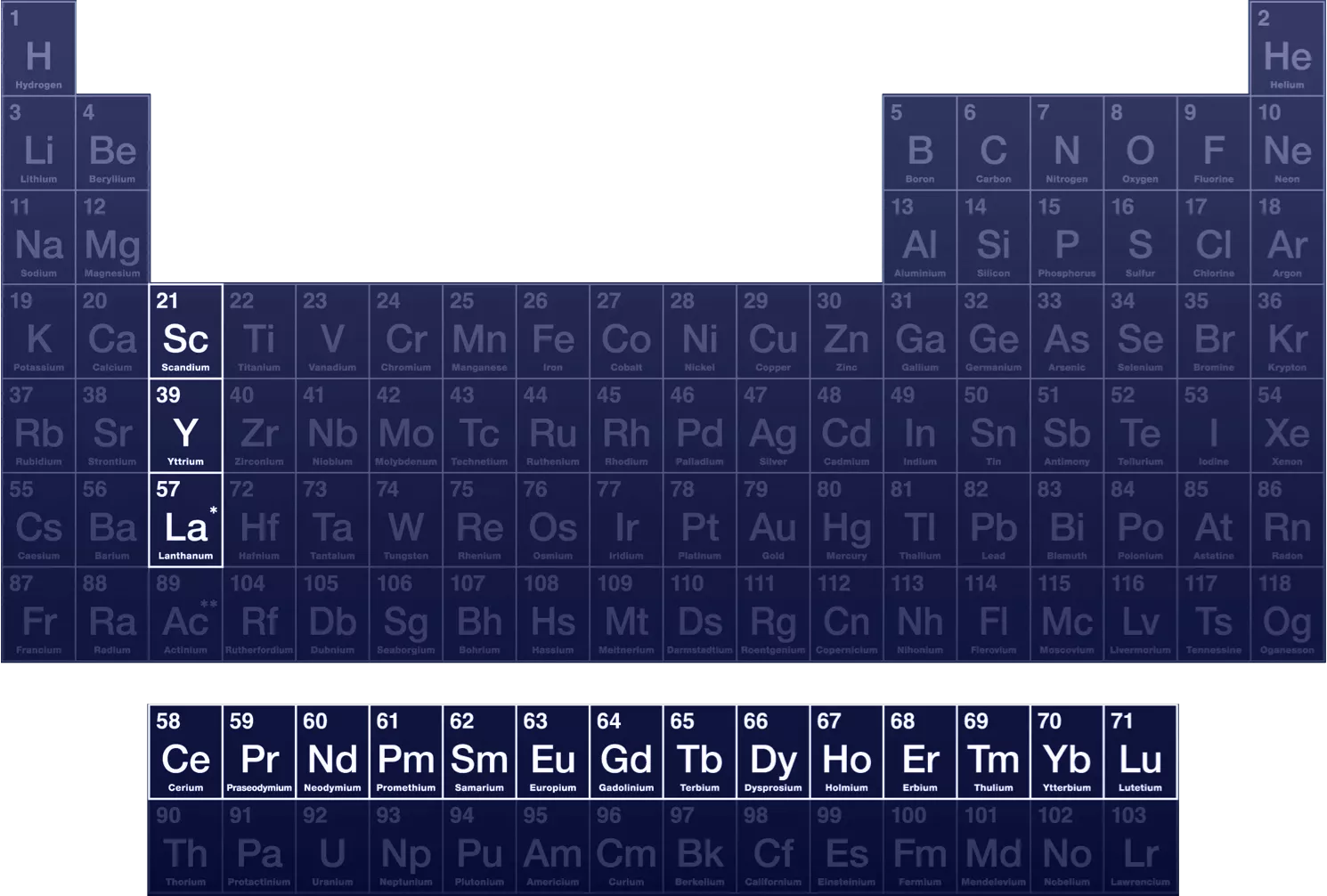
Rare Earth Elements are a suite of 17 metallic elements used in many modern technologies.
Modern technologies include Electric Vehicle Motors, Permanent Magnets, Wind Turbine Generators and Smart Phones.
China accounts for 57% of the global mined production and 85% of refined production of Rare Earths Oxides.
Governments have listed Rare Earths as critical minerals including Australia, US, EU, Canada and the UK for their strategic and economic importance the transition to renewable energy.
Rare Earth Elements are used for a variety of applications
29%
Magnets
20%
Catalysts
14%
Polishing
8%
Batteries
29%
Others
Source: Outlook for Selected Critical Minerals Australia 2021, Department of Industry, Science, Energy and Resources